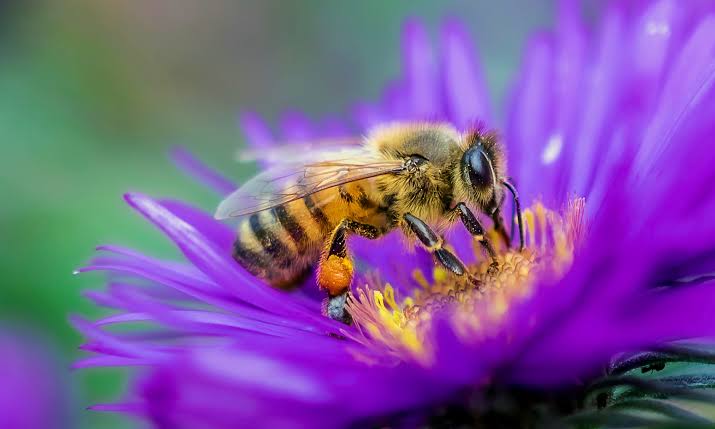
>>2727518How hot is your climate? I'm in the rockies where the summers are easily 110 degree at its peak and they're fine. The cue that they're too hot is if they're bearding (e.g. sitting in front fanning their wings trying to cool the hive), sort of looks like picrelated. If they are bearding you can swap your bottom board to a screened bottom board and that will get them some circulation. Its very likely your bees are doing their orientation flights as they're getting used to their new home
Hive beetles aren't a problem in my climate so you'll need to do your homework there, from what I understand dealing with the beetles has a lot to do with prevention and setting up traps and preventing them from getting a foothold. Do your research,
as far as Varroa mites goes, learn how to do the powder roll test and the alcohol bath test (alcohol bath is lethal to the 100 bees so I prefer powder). Your bees are probably fine for now, but you should do a test for varroa at least once a month and treat if they breach threshold (2-3% or 2 mites per 100 bees) (
https://www.instructables.com/Sugar-Coated-Honey-Bees-or-How-To-Test-for-Varroa-/). I typically have to treat at least once a year during the fall and I use formic pro strips cause they're easy, but there are a bunch of other options, some you can treat with your honey supers, others need the supers to be removed.
Learn how to spot for other conditions too, things like European Foul Brood, Nosema, Tracheal mites, chalkbrood, etc. They each have their own symptoms and ways you can treat. The big one you should learn are the signs and symptoms of American Foul Brood, which unless your bees are vaccinated unfortunately requires you to euthanize and burn your hives. My state (utah) requires us to register our hives and we get notices if there is a AFB outbreak in our area, (we had a scare last year but all my hives were unaffected fortunately) but if your hives get it, you gotta act fast.