[681 / 44 / 123]
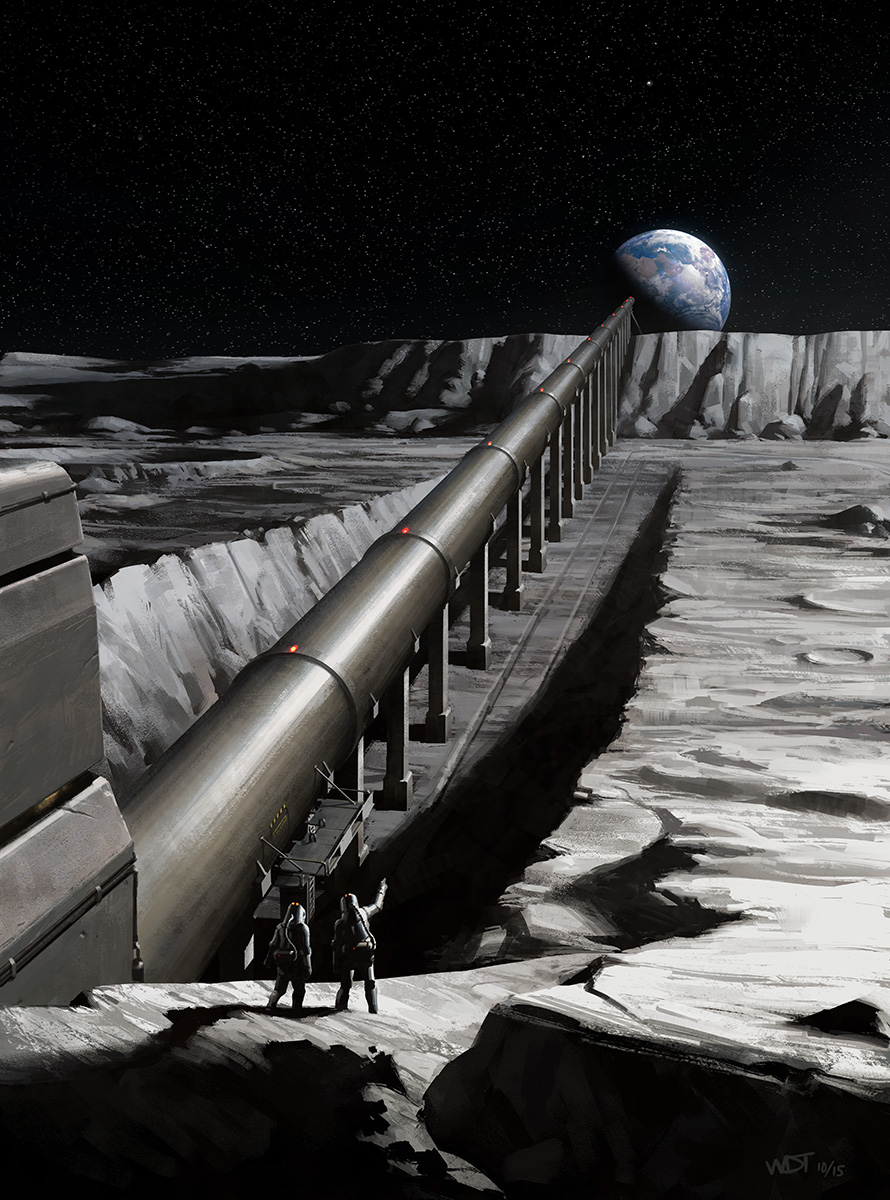
The year is 1989, and the world is at war.
It all started back in 1983, in the run up to the Able Archer exercises. Though most people didn’t really know it at the time, the world was slipping ever closer to war. The United States and her allies prepared for a confrontation with the Soviet Union, and that preparation was seen by the Soviets as a prelude to an attack. Military units on both sides were preparing to move, and the risk of someone making a mistake and lighting off a matchbox that had been slowly building for decades.
But just before Able Archer kicked off, space tracking radars on both sides of the iron curtain spotted a series of objects approaching the earth. At first it was assumed that it was a small cluster of micro-meteorites, which would burn up as they entered the atmosphere. As Able Archer kicked off, ballistic missile tracking radars picked up the objects, and agreed with the longer range tracking sites that the objects were micro-meteorites that would burn up over western europe.
So when those objects didn’t burn up, nobody on the ground was prepared for the hunks of metal falling on their heads at orbital speed.
While many of the objects slammed into open fields without incident, some slammed into villages, towns, and military sites at orbital speed. Each object landed with the force of a cruise missile, leveling buildings and scoring craters into the German countryside. And one very unlucky IL-76 at Sperenberg Airfield was cut in half as it taxied to the runway. Local officers on both sides of the iron curtain mis-identified the impacts as tactical artillery strikes, and held their counterparts on the opposite side responsible. The situation almost escalated as troops in Berlin moved to defensive positions and dared their counterparts to attack, and over the next few weeks the situation only edged closer to war as both sides traded accusations and blamed each other for the attacks.
The next week was filled with strong accusations, threats of nuclear strikes, and military posturing as both sides blamed each other for the attacks. A common understanding on the topic only started to emerge after radar tracking data was released by NASA and verified by the Soviet Union. The data clearly showed the objects approaching earth from a steep angle, and at speeds which ruled out any possibility of the objects having been launched from the earth. And given how both sides had kept extensive records of each other's space programs, both agreed that neither of them could reasonably be responsible for the attacks.
>Cont
It all started back in 1983, in the run up to the Able Archer exercises. Though most people didn’t really know it at the time, the world was slipping ever closer to war. The United States and her allies prepared for a confrontation with the Soviet Union, and that preparation was seen by the Soviets as a prelude to an attack. Military units on both sides were preparing to move, and the risk of someone making a mistake and lighting off a matchbox that had been slowly building for decades.
But just before Able Archer kicked off, space tracking radars on both sides of the iron curtain spotted a series of objects approaching the earth. At first it was assumed that it was a small cluster of micro-meteorites, which would burn up as they entered the atmosphere. As Able Archer kicked off, ballistic missile tracking radars picked up the objects, and agreed with the longer range tracking sites that the objects were micro-meteorites that would burn up over western europe.
So when those objects didn’t burn up, nobody on the ground was prepared for the hunks of metal falling on their heads at orbital speed.
While many of the objects slammed into open fields without incident, some slammed into villages, towns, and military sites at orbital speed. Each object landed with the force of a cruise missile, leveling buildings and scoring craters into the German countryside. And one very unlucky IL-76 at Sperenberg Airfield was cut in half as it taxied to the runway. Local officers on both sides of the iron curtain mis-identified the impacts as tactical artillery strikes, and held their counterparts on the opposite side responsible. The situation almost escalated as troops in Berlin moved to defensive positions and dared their counterparts to attack, and over the next few weeks the situation only edged closer to war as both sides traded accusations and blamed each other for the attacks.
The next week was filled with strong accusations, threats of nuclear strikes, and military posturing as both sides blamed each other for the attacks. A common understanding on the topic only started to emerge after radar tracking data was released by NASA and verified by the Soviet Union. The data clearly showed the objects approaching earth from a steep angle, and at speeds which ruled out any possibility of the objects having been launched from the earth. And given how both sides had kept extensive records of each other's space programs, both agreed that neither of them could reasonably be responsible for the attacks.
>Cont
